Organic status and lot condition
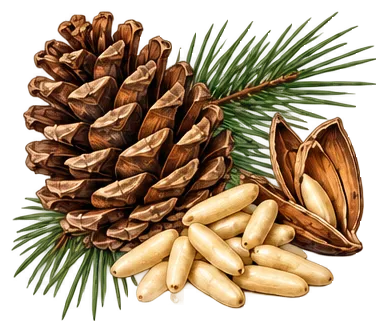
Germany notified Salmonella in organic pine nuts from Italy in November. The affected quantity, lot identities, distribution and measures taken are unspecified.
The commercial focus is the individual consignment, rather than Italian or organic pine nuts generally. Industry sources stress that certification and product analysis serve different purposes. Buyers commonly expect each lot to be checked for microbiological condition, aflatoxins, heavy metals, moisture and rancidity. Salmonella is among the organisms frequently included in commercial testing requirements.
EU microbiological rules contain no separate pine-nut criterion. General food-safety responsibilities still apply, alongside the specifications agreed between trading partners.
Organic compliance also covers collection, processing, storage and export arrangements. Traceability links the forest to the processor; analysis checks the product’s condition. For buyers, trade guidance stresses that organic status alone cannot establish microbiological condition. For suppliers, certification remains relevant to acceptance, but evidence tied to the consignment answers a separate question.
A smaller EU import flow, still concentrated
EU imports of shelled pine nuts from outside the bloc contracted during August 2025–July 2026 against the preceding August–July period. The total import bill was nearly unchanged despite lower volumes, while the average import value per kilogram increased.
China supplied the overwhelming majority, even with lower shipments. Türkiye, Mongolia and Russia also supplied less during that period. Afghanistan and Pakistan supplied more, but the trade remained heavily concentrated rather than broadly diversified.
Germany was the largest importing member state, followed by Italy, the Netherlands and Spain. German, Dutch and Spanish arrivals declined, while Italy was nearly unchanged.
Industry sources link China’s competitive strength to processing scale and established customer relationships. Its processors handle raw material from several countries, so the dispatch country may differ from the growing origin.
Russian-origin pine nuts face additional EU customs duties, applicable since July 2025. Trade guidance notes that insurance and reputational barriers also affect European trade. These conditions shape competitiveness alongside harvest size.
Buyers therefore remained dependent on the Chinese channel within a smaller import flow. Alternative suppliers gained business in places, but still competed against that established processing and distribution network.
Crop recovery is expected, but kernel quality still matters
Industry estimates put the global in-shell crop, total seasonal supply and ending stocks lower in 2025/2026 than in 2024/2025. The smaller harvest was accompanied by a reduced stock cushion.
In August, trade reports forecast a larger global crop for 2026/2027. Their estimate of total seasonal availability included both that harvest and stocks carried forward. Forecast availability was higher than in 2025/2026.
Those August forecasts also favoured a strong Chinese rebound, though below its 2024/2025 harvest. Russian and Mongolian production was expected to expand substantially without becoming abundant. Türkiye was expected to increase, while Spain and Portugal were forecast to recover sharply from weak preceding crops.
In September, however, reports described difficulty finding kernels combining freshness, traceability and good condition. Some Russian and Mongolian traders were buying in China to fulfil existing export obligations.
For buyers, crop recovery offers the prospect of more physical supply, while commercial suitability depends on what processors deliver. Suppliers with fresh, traceable kernels retain a point of difference even as competing harvests improve.
Chilgoza prospects favour Afghanistan as Pakistan’s crop is expected to shrink
Chilgoza is associated with eastern Afghanistan, northern Pakistan and northwestern India.
In August, forecasts favoured a strongly expanding Afghan harvest for 2026/2027 against 2025/2026, alongside a sharply smaller Pakistan-grown crop. September official forecasts also expected average-or-better Afghan pine nut production, supported by weather and irrigation.
In August, trade reports described most Afghan pine nuts as being processed in Pakistan. Additional shelling and processing facilities were being built in Afghanistan.
For buyers, the stronger Afghan crop outlook remains linked to where the nuts are processed. For Afghan suppliers, plants being built in August represented future processing capacity, not capacity already operating. Pakistani processors handle Afghan material as well as their own country’s harvest, so the domestic crop contraction does not describe their whole raw-material base.
Market direction differs across supply channels
The price story has not moved in one direction across origins. Market reporting linked Chinese firming around the turn of 2025 into 2026 to weaker Korean pine production and restricted Siberian kernel imports. Weak consumer spending and affordability limits held back the increases.
September market reports described stronger Afghan supply alongside sharply softer domestic prices. In that account, producers and traders relied more on overseas sales to find outlets for the crop.
Chinese exports showed a steadier tone in separate September reports. Those reports attributed stability to a balance between spot supply and restrained purchasing ahead of harvest. Demand in Europe and other developed destinations absorbed Chinese product. Importers were described as generally reluctant to overstock while waiting for clearer new-crop flows.
A separate September outlook anticipated continued kernel firmness, citing sourcing difficulties for fresh material with suitable quality and traceability.
Buyers thus faced local Afghan weakness rather than uniform easing in export-ready kernels. For suppliers, the pressure depended on harvest selling, overseas demand and the condition of material reaching customers.
Market Reading
What comes next depends on actual kernel arrivals, the pace of Afghan export sales and the evidence supporting acceptance of each consignment.
Repeatable quality, sound paperwork and reliable delivery are key requirements for industrial customers. Requests for an analysis certificate covering the particular shipment lot before dispatch are frequent.
In September, market reports described a divide in recipe demand. Premium products kept pine nuts prominent, while cost-led formulations used less or combined them with cheaper ingredients. Cashews are the leading alternative in mainstream pesto.
Buyers need supply that fits the recipe, has documented quality and arrives consistently. Suppliers’ dependable performance and documented quality support acceptance, while cheaper substitutes compete for cost-sensitive business.