Thai firmness, Vietnamese stability
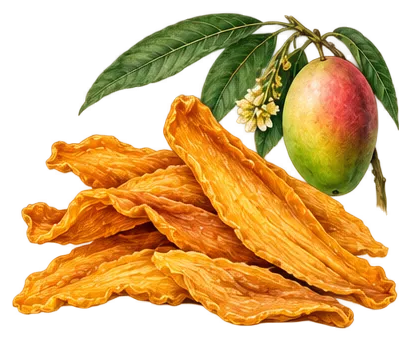
Trade reports described Thai dried mango as slightly firmer, while Vietnamese product held broadly stable. They linked the Thai tone to steady demand and caution about supply. That is a modest movement at one origin, not a general rise across dried mango.
Thai suppliers have some backing for their selling stance, while buyers elsewhere are not facing the same upward pressure. The change gives neither side a clear advantage across the whole market.
Supply caution during the seasonal transition
Trade reports describe a quieter interval between processing seasons, with existing dried-mango stocks coming from the previous crop. They assess the supply-demand balance as broadly even, without an outright shortage. Exporters in Thailand and neighbouring origins nevertheless remain concerned about variable weather and water constraints.
According to seasonal reports, Thailand normally moves towards cooler, drier conditions around late October and early November. Industry sources associate that transition with easier orchard access, although showers can linger in the eastern growing areas.
The same account also describes buyers beginning to arrange supply before the next main processing window. It associates the seasonal change with improving fruit quality. That brings purchasing activity and expectations for fresh processing into the same conversation.
Caution over replenishment is different from scarcity of finished goods for buyers. Trade commentary suggests that weather concerns can still support a guarded selling tone among suppliers, even while the reported overall balance remains comfortable.
Regional competition remains active
Regional trade commentary indicates that Thai, Vietnamese and Cambodian processors continue to compete for regional and Chinese business. They are pursuing overlapping demand, so a firmer stance in Thailand does not remove the commercial pressure between them.
Vietnam also has secondary mango harvest periods that overlap November. Industry sources describe an October–December window in Tiền Giang and Đồng Tháp, followed by November–January in An Giang and Vĩnh Long. Those recurring seasons explain why fresh-fruit collection remains relevant outside the main harvest.
The next useful development is how that fruit reaches processors and becomes dried product.
Different fruit pressures across supplying origins
Other supplying origins have their own fruit pressures. In June, reports linked unusual heat in Mexico’s Nayarit and Sinaloa growing areas to disrupted flowering and substantially reduced fruit. They described Kent and Keitt as particularly affected, with consequences expected for both drying and individually quick-frozen processing.
In August, forecasts pointed to pressure on northern Peru’s mango production following heat-impaired flowering. The concern was particularly strong for Kent in the coming campaign.
For Peru’s opening harvest, Edward and Haden were described as having handled the heat better. In the purchasing areas described, their smaller supply base serves fresh exporters, freezers, pulp plants and dryers alike. Fruit therefore has several competing outlets before it reaches a drying line.
These are separate origin pressures, not explanations for Thailand’s movement. Buyers’ wider sourcing options face different raw-material constraints. For suppliers, competition for fruit affects processing access without demonstrating stronger demand for the finished product.
European support depends on product mix
Europe brings a different competitive picture. Reports describe the Netherlands as an important entry and distribution point for dried mango destined for the EU. Asian processors reach customers there alongside established African suppliers.
In March, market reports placed Ghana and Burkina Faso among Europe’s main supplying competitors. Côte d’Ivoire and South Africa also featured prominently. Market reports distinguished natural mango from sweetened products, with cuts, preservation and drying methods further defining the business.
That March assessment described snack demand as favouring products without added sugar or preservatives. It also noted strong interest in organic slices, sulphite-free products and African supply carrying Fairtrade certification. Support therefore attaches to particular formulations and sourcing attributes, not simply to dried mango as a category.
Buyers’ relevant alternatives depend on the product segment they purchase. Suppliers’ negotiating room depends partly on meeting that demand, rather than sharing in a firmer regional mood.
Market Reading
What to watch through November is whether the Thai and Vietnamese directions stay apart, and how fruit collection and processor intake feed finished-product availability. Thai weather and orchard conditions are important influences on the next movement. Our reading is that Thai dried mango prices are edging slightly firmer, while Vietnamese prices remain stable.
Buyers retain alternatives, while suppliers have some support but no clear upper hand across the trade.
Indicative levels today:
- Price: USD 7.25/kg CFR MEUP
Various cuts and options are available.